Sunday, February 08, 2009

Bushfires Rage in Australia: 108 Dead

Compiled from dispatches

VICTORIA, Australia (February 9, 2009) -- The death toll after the worst wildfires in Australian history has risen to 108, with thousands of firefighters tackling the blazes.

Fires caused by temperatures of approximately 116F have burnt countless homes across the state of Victoria, with entire towns destroyed as unpredictable winds and high temperatures combined for the most deadly Australian bush fires in more than 25 years.

"It rained fire," said one survivor, showing his singed shirt. "We hid in the olive grove and watched our house burn."

On Sunday, the remains of charred cars littered the smoldering towns, about 50 miles north of Melbourne. Some vehicles had crashed into each other as their drivers frantically tried to escape the approaching fires.

Thousands of firefighters battled to contain the blazes, which witnesses said reached four stories high and raced across the land like speeding trains, spewing hot embers as far as the horizon. The most serious fires are burning north of the Victorian capital, Melbourne, reported the UK Guardian.

See current County Fire Authoirty Incidents and Statewide Fire Locator

Entire townships were razed to the ground, with television footage showing the picturesque hamlet of Marysville reduced to smoking ruins. Victoria state's Country Fire Authority said only one building was left standing in the popular tourist hamlet.

Australian prime minister Kevin Rudd said the nation had experienced an "appalling tragedy"."Hell in all its fury has visited the good people of Victoria in the last 24 hours," he added.

Queen Elizabeth today expressed her shock at the destruction caused by this weekend's fire."I send my heartfelt condolences to the families of all those who have died and my deep sympathy to the many that have lost their homes in this disaster," the head of the commonwealth said.

Victoria premier John Brumby confirmed he has accepted an offer for help from the national army to assist firefighters in the fight to contain the blazes. He indicated that the state has already received A$10 million in emergency aid.

The neighboring State of New South Wales has sent more than 250 firefighters, 50 tankers, 25 search-and-rescue experts, nine identification experts and five paramedics to help in Australia's worst bushfire disaster. New South Wales Premier Nathan Rees added that the state will provide assistance for as long as is needed to bushfire-ravaged Victoria.

A group of 30 American volunteers, who serve as seasonal smokejumpers with CalFire, plan to fly to Sydney on Monday, then travel to Victoria to assist with the firefighting effort. Ten American firefighters, part of a training team serving in South Australia, are already working on the frontlines north of Melbourne.

The BBC reports that Bushfires are common in Australia, but the current blazes have eclipsed the death toll from what had been the previous worst fire in 1983, when 75 people died on a day that became known as Ash Wednesday.

View slideshow produced by Australian Broadcasting

----------

Saturday, February 07, 2009

Coatesville's Arsonists: Please God, Not the Firefighters?

By: Lou Angeli

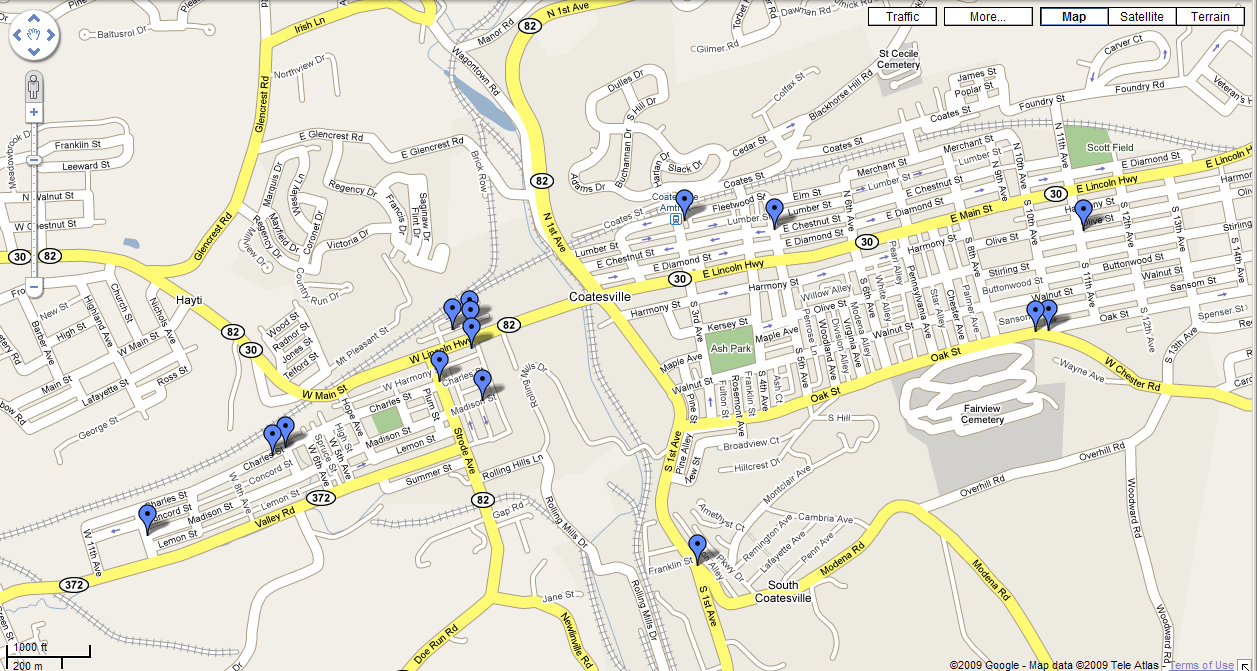
COATESVILLE, PA (February 7, 2009) -- Since the first of the year, firefighters in this once bustling steel town have seen more work in a few short weeks, than they might have seen during their entire career. A string of arson fires, now totalling 29, have plagued the city's 12,000 residents, and the multi-agency task force investigating the blazes have no solid leads.

It's a news story that is making world headlines, and has many in the fire-rescue services sitting on the edge of their seats. Why? In the past, similar multiple arson events have been the work of those entrusted to protect the citizens...the firefighters themselves.

Most studies investigating motives for arson note that the "torches" can sometimes be firefighters, who light the blazes for a variety of reasons. Most ofte, when a firefighter turns arsonist, it will usually be out of a desire for excitement or as a way of gaining attention and recognition.

There's not much solid research on the subject, but a 2005 study conducted by the Australian Institute of Criminology suggests that, "There are cases of firefighters who have started a fire, reported it and attended the fire with their unit in the hope of being seen as the hero who saves the community."

As firefighters, the thought of placing some one's life in jeopardy goes against our grain, but the fact is that a considerable number of arson blazes are started by people we would never suspect. In my career as a volunteer, I've experienced the phenomenon up close and personal on three separate occasions.

The three situations were not related and were separated by several years, but they were very similar in that the firesetters had a common motive. They told investigators that they had become bored sitting around the firehouse and wanted to "see some action." So, they chose to light up the night.

In the cases with which I'm familiar, I was stunned when I learned of the actions of my colleagues. Even though all were first offenders -- all received prison time. One of the firefighters, who torched his own apartment complex after removing smoke detector batteries, was convicted of several counts of attempted murder, in addition to a slew of arson convictions. It's clear that when once caught, charged, tried and convicted, judges and juries can be expected to come down hard on those who have sworn to a higher power that they serve to save lives and protect property.

For other members of the department, it's tough to tell when a resident arsonist has begun his run. At first, it's simply chalked off to a busy spell. But then a pattern emerges including types of structures, time of day and the arrival of the unusually prompt arrival of the Fire Marshal's SUV while companies are taking up.

The Coatesville Pattern

To understand the arson problem in Coatesville, you need to understand the history of the Fire Department. A few decades ago, the city's huge steel mills once employed thousands, most of whom lived in the neighborhoods surrounding the factories. It was these blue collar workers who also served to operate the city's three volunteer fire stations, some of which were the oldest in the Commonwealth.

But then came the unexpected -- cheap Japanese steel. With that the demand for Coatesville product plumetted and soon the mills shut down with workers moving elsewhere to find jobs. The historic downtown area was left to slowly rot and the housing situation went the way of nearby cities like Philadelphia and Chester. Coatesville's plight came complete with other big city problems like drugs. gangs and street crime.

Over the past 10 years, the volunteer companies have been disbanded. Today, the Coatesville Fire Department operates two fire stations staffed by 7 career firefighters, who are augmented by volunteers who served in the old companies. Like any combination system, the department sometimes experiences problems with adequate staffing, but during the current run of arson jobs, there seems to be no shortage of firefighters.

In reviewing the recent news stories and statistics, most of the arsons happen in the evening after 9pm, and of those the majority occur on weekend nights. Although the department no longer is accepting volunteer applications, nearby volunteer companies conduct move-ups during peak hours in anticipation of more work and cover-ups.

Click here to review locations of fires determined to be arson.

Kudos to the City Fathers

The city administration has been pro-active during this entire ordeal. The Mayor declared a formal state of emergency, giving him the immediate power to acquire resources it may need as it continues to try to battle this plague of fires that have hit the city. Fire Chief Kevin Johnson has referred to the blazes as the "...the work of terrorists."

"The safety of our residents is our No. 1 priority, and we will do whatever is necessary to protect them," said Police Chief William Matthews. "We are hoping that all residents will comply with our requests."

The most recent request is a actually a demand -- an 8pm curfew for those 18 years old and younger. A 10pm curfew has been imposed on other residents, as Coatesville, PA becomes a city in lock-down in order to keep the community safe.

A week ago ATF agents and a small contingent of FBI entered the city to assist the Pennsylvania State Police Fire Marshall and local investigators in determining clues.


Special note to Photo Buffs or those who want to SCUV. Pick-up a Chester County map at any Wawa store, and dial in Chester County Fire Radio at 154.16000 and 33.86 for mutual aid. Stage outside the city along US Route 30 (east of town) or PA Route 82 (south). Another good staging area would be near The Fire Store, along US Route 30, west of town at the airport.

----

Tuesday, February 03, 2009

NYS Firefighter/EMT Shot, Killed by Patient

EMT Shot in the back after patient becomes uncontrollable


Thousand Islands, NY (February 3, 2009) -- A 25 year old Firefighter-EMT from Cape Vincent (NY) Volunteer Fire Department was shot and killed when he and three other emergency services personnel were assaulted by an agitated patient.

The murdered EMT, Mark Davis, along with other EMS personnel had been summoned to the residence Christopher G. Burke in Cape Vincent by a 911 call. While being assessed by the EMS workers, Burke revealed that he had weapons in the home, police said. He became agitated, went into another room and retrieved a high powered rifle.

"They (EMS Team) heard the action of a weapon being activated. At that point the EMTs attempted to retreat from the residence," said State Police BCI captain Mark Lincoln.

As the EMTs retreated, Burke allegedly fired two rounds, one of them hitting Davis and killing him. Burke then ran from the home and was tackled and held down by another EMT. Clayton Police officer Robin Pearce took him into custody with help from Alexandria Bay Police officer Jerry Delosh.

EMTs at the scene attempted life-saving efforts on Davis and continued during the ambulance transport to Samaritan Medical Center in Watertown, where he was pronounced dead.

Please send your condolences to Thousand Islands Rescue (New York State)
-------

Monday, January 26, 2009

Del. Volunteers Poised To Beef-Up Standards

(New Castle County, DE) - January 26, 2009 -- A report in today's News-Journal paper and Delaware Online indicates that Delaware's volunteer fire companies will soon consider the establishment of minimum training standards for firefighters, officers and fire chiefs. Currently training minimums are set by individual fire companies.

Many of Delaware's volunteer departments base their training programs on NFPA-1720, which sets minimum requirements for fire suppression operations for volunteer firefighters. Boston-based National Fire Protection Association is a watchdog agency which develops standards for fire operations, EMS and building construction. The agency is not affilated with government and therefore has no enforcement powers.

A special note: The introduction of minimum requirements may result in the loss of volunteer members. who have little additional time to devote to lengthy training courses which, for the most part, are conducted at the State Fire School in Dover. Perhaps the Fire Commission and associations would consider a European model, which allows volunteers to conduct specific tasks on the fireground based on their level of training.

Read the story written by Mike Chalmers (here)
-----

Sunday, January 25, 2009

Inaugural Pumper 2009


Inaugural Pumper 2009
Originally uploaded by
LouAngeli2008

This pumper from Elsmere, Delaware was one of three fire engines featured in January 20's Inaugural Parade's Line-of-March in Washington, DC. With 300 television million viewers, that's a lot of name recognition. Congratulations to the Delaware Volunteer Firemen's Association and Pierce Manufacturing for being chosen to represent the nation's firefighters. (photo by Lou Angeli)

Digg!

Sunday, December 28, 2008

Recalling Route-52's "Phantom Box"

WILMINGTON, DE (December 27, 2008) – Long before the Route 141 Bypass, and years before Greenville evolved into a suburban shopping Mecca, firefighting along Route 52, Delaware's Chateau Country, was often handled by the Wilmington Fire Department. At least that’s the story that’s been handed down by old school Wilmington firefighters, several of whom recalled responding to what were commonly reffered to as “phantom box alarms."

In layman's terms a “Phantom Box” referred to a Fire Alarm Box (or Box number), which didn’t exist. When a call for help came from a citizen along Kennett Pike, Wilmington’s Fire Station 5, located in the 40 Acres section of the city, was dispatched to box 5-5-5. In strictly covert fashion, the men of Station 5 responded with a pumper, a multi-purpose quad and a crew of 9 or 10. And when the job was over, the crew quietly returned to quarters as if nothing ever happened. It was never discussed…never entered into the house journal.

Before World War II, fire response along the Kennett Pike, from Wilmington to the Delaware/PA state line, was virtually non-existent. There were no community fire stations, and it would be decades before New Castle County fire companies would determine how to slice up that piece of the county. When a fire occurred on the Kennett Pike, homeowners would dial “0” and reach the Diamond State Bell operator, who would direct the emergency call to individual fire company dispatchers, many of whom worked from their homes.

Once the operator convinced a rural dispatcher that there truly was an emergency, an engine was sent from Elsmere, Talleyville, Hockessin or even Kennett Square – whichever station assembled their crew the fastest. Back then; the trip wasn’t easy, as the top heavy, slow moving pumpers would make their way through the winding back roads and hills to the fire scene. The trip often took 30 minutes or more.

View the Fire Response map along Route 52

It’s tough to find records from days gone by, but suffice it to say that the Brandywine Valley had its share of blazes in the first part of the 20th century. From barns to multi-million dollar homes, if there was a working fire in Chateau Country, chances are fire companies would arrive to find little more than a smoldering foundation. With such tremendous losses, it may seem odd that communities like Greenville and Centerville, the folks who could easily afford to support a local firehouse, never considered building their own station.


The lack of rapid fire response became an issue with wealthy estate owners, whose assets included large homes, which contained collectibles, irreplaceable furnishings and artifacts. So, a wealthy few took the firefighting problem into their own hands, creating their own brigades, staffed by employees, chauffeurs and farm hands

The first brigade was formed in 1924 when multi-millionaire Pierre S. DuPont purchased a GMC fire engine to protect his estate, Longwood Farms. (Now Longwood Gardens) Two years later, he founded the Longwood Fire Company, and expanded the brigade’s responsibilities to include protecting his neighbor’s homes.

Further toward Wilmington, another DuPont family member, Henry Francis, established a well-equipped fire brigade to protect his growing property, furniture and art collections at the Winterthur Estate. Nearly 80 years later, Henry's brigade still exists covering the Winterthur Estate and Museum with 24 hour coverage, two fire engines and 26 trained fire-rescue personnel.

For the duPonts, leaving their properties unprotected would have been foolish, especially when a small investment in apparatus and equipment could provide them with a trained, rapid-response team. In retrospect, their good sense preserved what have become cherished national treasures.
But for other families and homeowners along the road between Kennett and Wilmington, the thought of watching their home burn as they waited for fire crews to arrive didn’t sit well.

The first to approach the city Fire Bureau was H. R. Sharp, Jr., whose "Gibraltar" estate sat just outside the city's corporate limits. His pitch to fire administrators was simple -- "I'll pay for you to respond to my home." It wasn't long before other families along Route 52 caught on and began to contract with the Wilmington Bureau of Fire for the so-called phantom protection.

For Wilmington firefighters, who worked a grueling military schedule of 24 hours on, 24 hours off, the response to rural New Castle County was always welcomed. Why? Homeowners were extremely kind to the responding firemen, offering them food, drink, but most importantly, gratuities. Of course uniformed personnel were forbidden to accept tips or gifts, but the thinking among the fire station personnel was, "What the Hell, these are phantom boxes”, fires that never took place…never happened at all.

Most of the salts who I’ve spoken to recall that the “phantom box alarms” ended sometime in the mid-1960’s. By then, volunteer companies had established district boundaries, with mutual aid agreements, many of which have been fine-tuned to provide much better service for those who live along Route 52.

Since the last phanton response, the Pride of the 40 Acres, Engine 5, has lost over half of its crew through cutbacks and attrition. These days there are just 4 firefighters and one pumper remaining in a station that once held three apparatus and housed 10 firefighters.

But even now, when FireCom dispatches volunteers along the Route 52 corridor, Station 5's watchman turns an ear, and the mighty Pierce Pumper draws a little extra current from it shore line, just in case the Phantom returns.
-----

Up Next: Could the Phantom Box concept increase fire protection along Route-52? What are some of the other solutions that could solve the problem of rapid response to Chateau Country?

###
Interviews included retired firefighters FFr.Doug Rifenberg, Lt. Russel Stats, Lt. Ed Stepp, and the late Chief Sean Mulhern.
Digg!

Tuesday, December 23, 2008

Update on Delaware LODD, Michelle Smith

Michelle Smith pictured with Warren Jones, President of the Delaware Volunteer Firemen's Association during the 2008 conference. (Photo courtesy Delaware City Fire Company) Click here for more Photos

Driver with Revoked License Arrested in Firefighter's Death
Line-Of-Duty Death Update:

NEW CASTLE COUNTY, DE (December 23, 2008) -- Delaware State Police late Monday identified the driver of a BMW which ran down Firefighter Michelle Smith and an injured motorcyclist, as Joseph Taye, 28, of Bear, Delaware. Taye was arrested and taken to Troop 2 in Glasgow, state police spokesman Cpl. Jeff Whitmarsh said.

Taye was expected to be charged with manslaughter, second-degree assault, driving on a revoked license, leaving the scene of a crash and failure to report a crash, Whitmarsh said.
He is being held in Young Correctional Institution in lieu of $37,000 cash bail. Sources close to the family say that he expected to make bail sometime today.

In the meantime, firefighters throughout the First State mourn the loss of a brave woman who was a dedicated firefighter and loving mother.

Michelle L. Smith had served the Delaware City Fire Company and the Delaware City Ladies Auxiliary for over five years. She also served as a member of the Volunteer Hose Company of Middletown, DE. A graduate of Middletown High School, Michelle worked for Coventry Healthcare. She leaves behind a 12 year old daughter.

Department spokesperson Dave Carpenter, Jr. characterized Michelle Smith as a truly positive person who specifically became a member to provide assistance to the community, through fire prevention and emergency medical services. Her work in fire prevention earned her the Edward McCormack Award, presented by the Delaware State Fire Prevention Commission.

Funeral arrangements are being made and will be posted on the Department's website at Delaware City Fire Company (Station 15). I am personally asking my fire-rescue-EMS colleagues in Pennsylvania, New Jersey and Maryland to consider sending a representative to Firefighter Smith's funeral.


Lou Angeli
302-275-4535

###

Monday, December 22, 2008

Delaware Firefighter Dies After Weekend Accident

DELAWARE CITY, DE (December 22, 2008) -- A Delaware City (DE) Volunteer Firefighter died today of injuries she sustained after being run down by a motorist on US Route 13 at the New Castle County Airport. Firefighter Michelle Smith, 29. was assisting in the treatment of the victim of a motorcycle accident when a driver sped through the emergency scene, running over Smith and the patient.

Smith and her EMT partner were staffing the Delaware City BLS Unit, which had been covering Wilmington Manor Fire Station #28, when they were dispatched to the report of a motorcycle accident with injuries, about 1 mile from the station. In Delaware, accidents involving motorcycles receive a multi-tiered response, which includes the nearest BLS unit, a county Paramedic unit, a Rescue/Pumper, Fire Police and the Delaware State Police helicopter.

The Delaware City ambulance responded immediately, arriving less than a minute after being dispatched. On arrival, Smith noticed the motorcyclist lying in the median of the four southbound lanes of busy US Route 13, and placed the ambulance in a blocking position. Smith and the EMT began to access the victim's injuries as traffic in adjacent lanes sped by at 55 miles per hour.

A passing New Castle County Police Officer stopped to render assistance, pulling his patrol car near the grass median. According to a News Journal report, "as he opened his door, the officer noticed a 2004 BMW 760 speeding in his direction and quickly got back into his car to avoid being struck."

Witnesses say that the BMW sideswiped the police cruiser, swerved around the ambulance and ran down Smith and the accident victim, Edward Reiss, 30. of New Castle.

The driver of the BMW fled the scene, then abandoned the car further south on US Route 13. He is said to have jumped into another vehicle, which quickly left the area. Delaware State Police believe they have identified the runaway driver, but offered no further information.

According to initial information released by the Delaware City Fire Company, Ms. Smith was treated on scene by NCC Paramedics and EMT’s from Wilmington Manor and Goodwill Fire Companies. She was transported to Christiana Emergency Department, where she was initially listed in stable condition as her injuries were further being evaluated.

News of her death came at around Noon on Monday, sending a shockwave through Delaware's small, tighly knit emergency services community. Smith is the first Delaware firefighter to perish in the line of duty in nearly 9 years. In 2000, a Greenwood (DE) Assistant Fire Chief was killed in a flashover during a training exercise gone bad.

Offer your condolences by visiting Delaware City Fire Company on the web.
####'
Resources:
-News Journal Papers
-Delaware City Fire Company
-Delaware State Police

Saturday, December 20, 2008

Mayor Strikes a Deep Blow to Philly's Firefighters

Mayor Michael Nutter

by: Lou Angeli

PHILADELPHIA, PA (December 18, 2008) -- Back in early November, Philly Mayor Michael Nutter announced plans to cut 7 companies from the Philadelphia Fire Department roster. The closings were part of a larger budget cut package that will eventually cost 800 city employees their jobs. Nutter’s reason? He says that the city faces "an economic storm" that could result in a $1 billion shortfall.

The proposed cuts to the Philadelphia Fire Department would be the most drastic in the agency’s 300-year history. Companies, which are being eliminated include:

Engine-1, Engine-6, Engine-8, Engine-14, Engine-39, Ladder-1, Ladder-11

Nutter has defended the company closings as being crucial to the city’s fiscal health, but critics want proof that proposed cuts won't increase risks. They cite increased response times and workload, as neighboring companies pick up the slack.

The cuts will reduce the department’s operating strength by 147, which essentially cancels the department’s new rookie class. A sad state of affairs as many of those young men and women have waited as long a 4 years for the class – and their careers – to begin. No active firefighters will lose their jobs as the city plans to reassign them to other stations in the city.


Engine-8, a popular spot for tourists and firebuffs, is already missing from this picture.

Whenever any fire station is closed, one can expect the community to be up at arms. But Philadelphians have been especially vocal in regard to this issue, launching impromptu street protests and supporting firefighters during their scheduled demonstrations.

Additionally, many of the closings make no tactical sense. For example, in the Roxborough section of the city, the loss of Engine 39 means that the first-due company in much of the area will be its station partner, Ladder 30, a tractor drawn aerial. Should a working fire occur, the ladder crew will be forced to wait for one of three surrounding Engine Companies to arrive before the fire attack to begin. Imagine the chaos as 5 firefighters pace back and forth in front of the burning building, waiting for water to arrive.


During presentation of his budget cut package, Mayor Nutter indicated that Emergency Medical Services would not be affected. If you read between the lines you’ll find that the comment is misleading. Each of the 7 companies, which are scheduled to be closed, are dispatched as a first responders on life-threatening emergencies. At least one member of each company is certified to the EMT-B level and nearly all members have been trained in the use of AED’s. It’s not unusual for an Engine or Ladder crew to have stabilized a critically ill or injured patient before the arrival of firemedic units.

The last of a dozen or so town meetings with Mayor Nutter was held last night but it doesn’t appear that he’ll be changing his mind soon. In the meantime, IAFF Local 22, the Philadelphia Fire Fighters’ Union, yesterday sued the city in both Pennsylvania Supreme Court and Common Pleas Court. Both complaints cite that firefighter safety and health will be compromised if the city proceeds with the closings.

“We have taken this step because we have no other choice,” said IAFF Local 22 President Brian McBride, a 33 year veteran of the Fire Department. “Lives are at stake', McBride added, 'Unless we do something to slow this thing down, I am convinced that people will die.”

There is no specific date set for the closings, but the Mayor has indicated they will take place just after the New Year. Many expect the shutdowns to take place without any warning, with on-coming crews being sent home to await reassignment.

For additional information, or to support Philly’s firefighters, visit this special website
SavePFD.com.
###

Resources:

-Philadelphia Inquirer
-IAFF Local 22
-WPVI-TV

Thursday, December 11, 2008

Letter to the News Journal Editor

published on Thursday, December 11, 2008

A debt is owed to all who volunteer to fight fires

America’s volunteer firefighters and emergency medical technicians are extraordinary people. Why? That’s simple – they work at this nation’s most dangerous profession for free. And you will likely never meet a group of individuals more consumed by an avocation, because theirs is a mission of supreme importance – to save lives and limit damage to property. They are dedicated to the core and prove it day-in and day-out by placing their own lives on the line to protect those of others.

The controversial decision as to what level of protection a volunteer fire department provides is not one that firefighters make, but a choice that falls smack dab on the laps of the citizens that they serve. Without the level of dedication provided by local community volunteers, fire rescue services in Delaware would be forced back upon local, state and possibly federal government,

And the thought of inviting federal emergency management at the local level would be disastrous.

We must take stock and the populace must make up its mind of which way they want to turn. If the community wants a higher level of fire protection, they’ll have to pay for it one way or another. Money makes the system work, and that is the bottom line.In a very real sense, the antagonist in this story is not the stubborn volunteer or the head-strong career advocate – it is public apathy.

Lou Angeli,
Wilmington

View my photo essay on Delaware's Volunteer Firefighters

###

Sunday, December 07, 2008

Volunteer-to-Career: Costs vs. Benefits

Volunteers at the mercy of the communities they serve
by: Lou Angeli
Nation's Bravest.com

(New Castle County, DE) -- I became a firefighter on a dare. I lost the bet and have been calling myself a volunteer ever since.

It was 1978, and the fallout from Wilmington’s “King Riots” (Martin not Rodney) had not yet cleared. Even though the rioting had been suppressed in a matter of weeks, the city remained a “police state” for a year, with heavily armed National Guard and State Police patrolling Wilmington's neighborhoods each and every night. Whether the constant military presence was really justified is still being debated in the First State. But one thing’s for sure - the riot patrols were a constant reminder that the city had somehow gone bad.

Civil disorder had ruined a huge section of town, and well populated Irish, Italian, Polish and Hispanic communities surrounding the devastation, were being abandoned for the safety and comfort of the city’s western suburbs. My parents and our family followed the lead.

The same scenario was being repeated up and down the East Coast as cities along the I-95 corridor lost families (and tax base) to suburban communities. In most cases, growth came so quickly to suburbia that government was ill prepared to cope. With the emphasis on providing better roads and a more appropriate infrastructure, Fire-EMS-Rescue protection was the last thing on most legislators’ minds.

“The Volunteers will handle it!”, was the reaction from many county seats and state capitals. But there was an inherent problem with their thinking. Volunteer fire departments were originally designed to protect small rural communities - not extensions of the big city.

Me and Citizen Fritz

Still in college, and a cub journalist for the local newspaper, my editor had assigned me to develop a feature expose’ on Delaware’s volunteer Fire-EMS system for the first-ever edition of Delaware’s first Sunday newspaper.

It seemed that some very vocal residents of a rapidly growing Wilmington suburb, Pike Creek Valley, were complaining that their community was being denied adequate Fire-EMS-Rescue protection. “The Valley” was a no-man’s land, developed on rolling farmland, miles from the nearest stores, churches and volunteer fire station. The community's mouthpiece, “Citizen Fritz” claimed that under the best of conditions, response time to “The Valley” was in “excess of 15 minutes.”

Although I didn't want the story, the editor claimed that I was best suited for the assignment, because I was already a Reserve Firefighter in the Wilmington Fire Department’s CD incubator system. He also knew that as a career advocate, I’d make the story controversial.

While researching the story, the local volunteer department’s President suggested that I join the company as a “probationary member” to get a firsthand look at how the volunteer system worked. But there was a catch to his proposal. If my report was favorable to the volunteers, I’d have to join as a full-blown member.

The Pike Creek Valley community lobbied heavily at the county and state levels to have a career fire station built - the first ever in Delaware, outside the city of Wilmington. Politicans promised quick action, which came in the form of an “outside” study. The results from Princeton, “not enough call volume to warrant a career station...’ but ‘the community is a prime candidate for its own volunteer station.”

At first, County government suggested that the existing volunteer agency relinquish the “valley” section of its district to the local community. And both the county and state agreed to fund the new entity as Delaware’s newest department. But there was just one problem, a big problem, as I reported in that very first edition of the Sunday paper, “...no one in Pike Creek Valley wants to man their proposed new volunteer fire station.”

Since then Delaware’s Mill Creek Fire Company has built, recruited personnel for and manned a well equipped fire station not far from the spot where I first interviewed “Citizen Fritz”, whose complaints of inadequate volunteer service were among the loudest. 25 years later, I’m told that “Fritz” has never stepped foot in the station that he so vehemently demanded.

“Citizen Fritz” is just one of millions of citizens nationwide, who enjoy the tax payer friendly protection of a volunteer system, but who are unwilling to join the “community of givers”, a term coined by Chief Ken Farmer of North Carolina. In most cases, “takers”, like Fritz, are also unwilling to dole out the money needed to support the career system that they believe they deserve.

So the controversial decision as to “what level of protection a
community deserves” is not one that we as firefighters make, but
a choice that falls smack dab on the laps of the citizens we serve.


“Fire, Rescue and EMS volunteers continue to provide a valued and low cost service in many communities, as they have for hundreds of years.” says volunteer activist Jim Wick, who was a member of Mill Creek Fire Co during the Pike Creek controversy. Today, Wick heads the Oregon Governor’s Fire Council and reminds us that “the volunteer service is still a good service, but it’s a changing service.’ He adds, “We need to keep the focus on service and cost to citizens.”

Case Study - Mill Creek Fire Co.

What would be the cost to citizens of converting their local volunteer agency to a career system? That’s the question that we posed to a half dozen fire service administrators, both career and volunteer. Their answers were remarkably identical, and is best illustrated by using the Pike Creek Fire Station, the one that “Citizen Fritz” demanded, as an example.

The Pike Creek fire station is operated as Mill Creek Fire Company’s Station #2, and serves as a remote sub-station to its main headquarters, which is still located in the heart of the original community, Marshallton, Delaware. The department operates as a corporation and is contracted by the state and county to provide emergency services. When the department was founded 75 years ago, it was a small farming community with less than 1,000 residents living in the district.
Today, the department serves a community of nearly 60,000, covering 17 square miles and a wide variety of risks. Annual call volume for both stations is in the thousands, and increasing each year.

Although the department has 300 members on its books, Station #2 is covered by 24 or so “active” volunteers, who are commanded by two company level officers and an Assistant Chief. During daytime hours, the department employs a core group of “paid” members to man and operate first-out equipment. The members of Station #2 operate a BLS ambulance, quint, rescue pumper and brush rig.

Even though “our administrators” disagreed on manning levels, (some suggested three and even two person engines) for the sake of argument, it was agreed that two firefighter-EMT’s would be assigned to the ambulance, with three other firefighter-EMT’s and and a shift commander assigned to cross-man the fire suppression and rescue rigs, 24x7, 365 days a year.

The committee arrived at the calculations by various methods and formulae, but the final average cost to the community came in loud and clear. Converting Station #2 to a career system would run a little over $840,000 per year, excluding capital expenditures such as training, PPE, tools and equipment, apparatus and building maintenance. Add to that amount projected overtime to cover vacations and sick leaves, a solid benefits package, and of course, a pension program, and the final number is well over $1 million. That’s the cost of running one small volunteer station, as a career job.

The benefits of such a career model are obvious. Immediate response by career professionals, day or night, as opposed to a delayed home response by well trained volunteers. In an ideal world, with no financial restrictions, my choice would be crystal clear.

But the ideal world only exists on paper, and the hard, cold reality is that the general public is not ready to bear the financial burden for the perfect system. At the same time, the chances of persuading John Q to devote a dozen hours each week to what we consider to be a noble profession are slim to none.

Without the level of dedication provided by local community volunteers’, says Chief Rod Carringer of Indiana, ‘fire rescue services in this country would be forced back upon state, local and federal governments.” And the thought of inviting federal management at the local level has many administrators shaking in their boots.

“If the federal government intervenes at the local level,’ notes Chief Michael Perkins, ‘the quality of protection will be based on a community's ability to lobby in Washington, not at the town hall. And that’s where small communities will lose out.”

And so the debate over career vs. volunteer is not one in which we, as firefighters, should be engaged in at this time. In a very real sense, the antagonist in this story is not the stubborn volunteer or the head strong career advocate - it is public apathy.
Change is blowin’ in the wind.

Will change in the fire service be a breeze, or forced upon us like a gail force wind? Only the general public can determine how hard this wind blows. But one thing's for certain. We can affect the outcome of the approaching storm by taking our message to the street, and allowing the public to decide.


####

Delaware's Volunteers: Response Times Fall Behind

Wilmington, DE (December 7, 2008) -- The long standing feud between Delaware's volunteer firefighters and the state's largest newspaper came to a head today when the News-Journal published a scathing report on volunteer response time. There's been a great deal of research involved with this story, and as they say, numbers don't lie!

Read the News-Journal story by Mike Chalmers

For most Delawareans, this feature represents their first knowledge of a system that can no longer serve the best interests of the community. What's the answer? It's time for fire administrators to staff Delaware's 60 fire stations with a core team of career firefighters, who can place first-due apparatus on the streets in 10 seconds -- not 10 minutes.

Interactive Map of Delaware's Fire Stations

Photos of Delaware's Firefighters

My Report: Last One Standing

###

Wednesday, December 03, 2008

India's Bravest Taken To Task

By: Lou Angeli

Mumbai, India (December 3, 2008) -- Just last week, terrorism reared it ugly ahead again, this time in the Indian city of Mumbai. Once known as Bombay, Mumbai is the 2nd largest city in the World, with a population of 19 million and growing. The city is the economic capital of India and home to the nation's incredibly huge film industry.

But on November 28th, even Bollywood’s best scriptwriters couldn’t have topped the story that was taking place in the streets of south city. Teams of terrorists, believed to have snuck into the city from Pakistan, went on a rampage of murder and destruction that lasted nearly four days.

In addition to automatic weapons and grenades, the terrorists wreaked havoc in public buildings by exploding bombs made of C4, which ignited massive fires in two hotels and the earth’s busiest train station.

As the Mumbai Fire Brigade mobilized to fight these blazes, officers and firefighters alike knew that they’d be facing a tremendous challenge as terrorists attacked multiple, high visibilty targets within the congested city centre.

In a city of nearly 20 million, there are only 30 fire stations and 2,000 uniformed firefighters. What makes matters worse is that the Brigade has long been government’s stepchild, forced to operate as if it were 1950. Apparatus are old (20 years plus), firefighting equipment is worn, most SCBA’s no longer work, and the members themselves have no PPE to speak of.

As station members began to arrive on the fireground turned battleground, their size up was not very promising.The attacks took place in buildings which were frequented by foreign tourists, especially American and British citizens. Among the buildings involved were the Taj Mahal Hotel, Hotel Trident (formerly Oberoi), Chhatrapati Shivaji Terminus (formerly Victoria Terminal), The Leopold Cafe and Bade Miyan Gali.

In a well-planned series of simultaneous attacks, the terrorists murdered as many as possible, taking hostages and igniting fires within the centuries old structures. The largest blaze burned at the Taj Mahal Hotel where the flames started on the upper floors and systematically consumed floors below..

With no sprinkler systems or interior standpipes, the fire suppression effort was limited to a master stream attack from aerial devices such as the Bronto Skylift. The firefight was hampered by gunfire aimed at fire-rescue personnel, who bravely remained at their posts both atop the aerial platforms and at the ground level. Additional aerial devices were brought in – some from 50 miles away -- as the onerous task of rescuing and removing hundreds of trapped victims began to take place.

Amercian businessman, C. Richard Diffenderffer, was just one of the scores who were trapped by the lethal combination of gunfire and flames. As the blaze burned downward, the Delaware businessman could hear the flames in the 6th floor room above him. Finally, hours after the ordeal began, fire crews finally reached Diffenderffer.

“These guys are true heroes,” Diffenderffer said about Mumbai's firemen. He added that the rescue team surrounded him in order to protect him from gunfire that was pelting the Skylift’s basket. He refers to Mumbai's Bravest as "angels from Heaven."

By Saturday, the last hostages were freed as the remaining terrorists were wiped out by Indian Special Forces. The attacks killed 174, including 26 foreigners. 240 were injured and damage tolls to hotels and the train station are still being determined.

In the wake of the late November 2008 events, it was revealed that Mumbai's firefighters are poorly equipped and not prepared to effectively battle such large blazes. One fireman best described the brigade's PPE as London circa 1950. Indeed, members currently wear wool tunics and compressed cork helmets, the same gear used by firemen in England during World War II. State-of-the-art firefighting gear has apparently been authorized by the Brihanmumbai Municipal Corporation, but 13 months after being fitted, frontline firefighting teams have yet to see these lifesaving garments.

As official enquiries begin, and politicians face the press, citizens of Mumbai will demand answers. There will be a tremendous outpouring of support for the city's heroic firefighters, and the brigade will eventually benefit from this tragedy much like their FDNY colleagues did following the events of 9/11/01. The PPE that brigade members have been anxiously awating apparently will soon be shipped. And there have already been discussions of replacing aging apparatus and perhaps training special teams of firefighters to enter burning buildings to conduct an interior firefight.

2,000 firefighters protecting a population of 19 million? In my book, those numbers seem a bit screwy, especially when compared to staffing in US departments. It seems like a recruitment program to hire additional firefighters would serve to bolster the ranks of India’s Bravest, while providing much needed protection to one of the largest municipalities on earth.

###

Friday, November 28, 2008

Fire Union to Chiefs: “Don’t meddle!”

Union and Chiefs Bump Heads on Two-Hatter Issue
Washington, DC (November 28, 2008) -- It’s been a bone of contention for decades – career firefighters also serving as volunteers in their home communities. This “two-hatter” concept has been a godsend to volunteer departments, who benefit from the expertise and daytime availability of well-trained, paid municipal firefighters. But in recent years the union representing North America's paid firefighters has really turned up the heat on those who have chosen to serve in a dual capacity.

The supporting position for the International Association of Fire Fighters is simple; that secondary employment – including volunteering -- of IAFF members as a firefighter or other public safety worker is wrong, unsafe and against the IAFF's constitution. For the most part, IAFF locals have turned a blind eye to the practice. But with the volunteer fire service losing tens of thousands of members to poor retention and recruitment (see Last One Standing) these “two hatters” are essentially permitting volunteer agencies to operate without the need for hiring paid staff. Something to consider with the economy and job situation as it is.

On the Volunteer side of the issue, administrators cite the US Constitution as the governing law in this thorny matter. In a November 3rd statement, the International Association of Fire Chiefs wrote, “(We) support the rights of each individual to choose to serve in any capacity, whether in a volunteer, paid, or paid-on-call position.”

The IAFC statement also swings a heavy axe at the IAFF’s embargo. “The IAFC would recommend that no membership organization – volunteer, trade, or paid – should restrict membership and the right to serve in multiple organizations or communities.” Needless to say, IAFF’s DC-based headquarters was quick to respond to the IAFC challenge.

IAFF General President, Harold Schaitberger
"This is not an issue that welcomes or warrants an opinion from the IAFC," said Harold A. Schaitberger, General President of the IAFF in an open letter issued on Tuesday of this week. As reported on FireRescue1.com, Schaitberger went on to call the statement an attempt to "meddle" in the IAFF's internal affairs.

Although I’ve been unable to find supporting statistics, a great many career personnel who I know also serve as volunteers in the communities in which they live. But it’s no big shakes here in Delaware, where career personnel total only about 200 members, represented by 3 IAFF locals.

But consider Long Island, home to hundreds of volunteer fire departments, and most of FDNY’s 14,000 members. Long Island fire departments have long prided themselves as being fully-volunteer. But reality is that many within these "volunteer ranks" also carry the FDNY shield in their wallet. You’ll also find paid apparatus drivers, who are listed by their employer departments as janitors or maintenance personnel.

“If it weren’t for the ‘two-hatters,’’ one Nassau County administrator told me, ‘daytime response would be in a shambles.”

Under the IAFF’s membership rules, a union member agrees not to accept secondary employment as an emergency responder, unless the position is represented by another affiliated local. And it’s the responsibility of the locals – not the International – to enforce the “two-hatter” regulation. But few have chosen to do so.

The State of Connecticut recently passed legislation that codifies the right of career firefighters to volunteer during off-duty hours. Development of the law was prompted by a 2003 agreement between the City of Hartford and the Hartford Firefighters’ Local prohibiting city firefighters from volunteering in their hometowns during personal time. Within days, Mayor Eddie Perez was inundated with letters from volunteer agencies, citizenry and the National Volunteer Fire Council demanding that the agreement be rescinded.

Then National Volunteer Fire Council Chairman Philip C. Stittleburg wrote to Perez noting that the Hartford ruling would have wide reaching implications, one that would affect volunteerism nationally.

“The firefighter union’s organized campaign against the volunteer fire service is aimed at destroying our ranks in the hope of increasing union membership and power,” Stittleburg wrote.

Many in the Fire-Rescue services agree with Chairman Stittleburg’s belief that these actions are simply a power play by the International Association of Fire Fighters. That may be so, but the IAFF is also following through on one of its primary missions – and that is to protect its members. Case in point: The 1999 line-of-duty deaths of two Fort Worth, TX career firefighters, who had responded to a church fire as a members of their local volunteer department, River Oaks.
Phillip Dean and Brian Collins were killed instantly when the roof of the well involved Lake Worth, TX church collapsed on them and 20 year-old volunteer firefighter Garry Sanders.

Following their burials, the Fort Worth Local 440's Pension Board denied the families of Dean and Collins death benefits because they weren’t working for the Fort Worth Fire Department at the time. The Pension Board suggested that the burden of caring for the families lie with the suburban department for which they volunteered. Sadly, at the time, the agency did not carry insurance for those members who became injured or killed. The surviving familes relied on federal death benefits, which topped out at whopping $55,000 in 1999.
For me, the thought of not providing for my family, if I were to perish in service to the community, is plenty enough reason to not volunteer. It’s quite possible that neither Dean nor Collins knew that they had no benefit coverage while serving at River Oaks.

The next step for the IAFF is to lobby at the federal level in an effort to persuade lawmakers to legislate career firefighters to stay at home when off-duty and out of volunteer firehouses. If successful, the volunteer fire service -- especially departments surrounding large municipalities -- would be dealt a lousy hand. The chips would go to the public, who will be forced to decide on how much they're willing to ante up to protect their communities.

Personal note: I’ve got no gripe with the concept of “two hatters”, although when I compare it to a plumber returning home at night, only to rush off and fix someone’s drain for no fee, the thought is a bit bizarre. However, I do have a deep concern for “two hatters” as well as volunteers who serve in agencies that provides little or no benefits in case of injury.

If you decide to don that second helmet, make it a point to determine what benefits exist for you and your family, should tragedy strike on the fireground. My bet is that you’ll find you have poor coverage at best. That’s when you should hang up that second lid and take up golf.


###
Resources:
-FireRescue1.com
- IAFFOnline.com
- International Assn. of Fire Chiefs

Tuesday, November 25, 2008

Federal Safety Vest Requirement Goes Into Effect


Everywhere, USA (November 24, 2008) -- A new provision from the Federal Highway Administration goes into effect today requiring firefighters and EMS personnel to wear flourescent safety vests when operating at emergency scenes along nationally funded roadways.

The vests must meet the Performance Class II or III requirements of the American National Standards Institute/International Safety Equipment Association (ANSI/ISEA) 107-2004 publication. ANSI requires that vests be fluorescent yellow-green, orange-red, or red background material with 360 degree retroflective visibility.

A provision was recently added to the Manual on Uniform Traffic Control that exempted Firefighters from wearing vests, who were directly engaged in fire suppression as the vest material could ignite or melt if exposed to flame.

A full range of vests are available online at NYFireStore.com

Although the FHWA rule applies only to responses on federal aid highways, most fire administrators agree that firefighters and EMS personnel responding to any roadside incident wear MUTCD-approved safety vests.

While there is no federal funding set aside specifically to help local agencies purchase safety vests, my personal request is that local fraternal groups such as the Lions, Jaycees and Shriners consider taking the initiative to help local fire-rescue agencies outfit their members with this vitally important safety equipment.


photo courtesy NYFireStore.com


Wednesday, November 19, 2008

Brea Fire/Triangle Complex Fire


AVEKNEWSSERVICE 206
Originally uploaded by NEWSMAN91

This wildfire in Corona, California is finally contained, but not before scorching more than 30,000 acres and destroying or damaging at least 259 homes. To place this in perspective for East Coast firefighters, the Philadelphia Fire Department loses about 259 homes each YEAR.

Thursday, October 16, 2008

MedEvac Crash Trend Continues Following Illinois Incident

Illinois Medical Chopper Crash brings 2008 total to 12

AURORA, Ill. (October 16, 2008) ― A medical helicopter responding to Chicago’s Children's Memorial Hospital crashed into a forest preserve in Aurora, IL overnight, killing the three crewmembers on board and their patient, a 14-month-old girl.According to CBS station WBBM-TV in Chicago, the medevac helicopter clipped a guy wire that was supporting a radio tower nearby before crashing

The helicopter was headed for Children's Hospital from the western suburbs when it went down around midnight. Aurora firefighters arrived to find the helicopter in the Night Heron Marsh Forest Preserve, fully engulfed in flames. Rescue crews immediately attempted a rescue operation but onbly found the four deceased victims, including three crew members and the child.

The helicopter was owned and operated by Air Angels Inc., an emergency medical transport service based in suburban Chicago near Bolingbrook, IL.

The Illinois crash comes among a spate of devastating Air Medevac incidents that have plagued the emergency services during the past year. Just last week, a Maryland State Police “Dauphine” helicopter crashed near its barracks at Andrews Air Force Base, killing the pilot, a police medic, a volunteer EMT and the crew’s patient, a 17 year old accident victim.

In July, the fatal collision of two medical helicopters in Flagstaff, AZ was the ninth accident involving emergency medical aircraft to date. At that time, the chairman of the National Transportation Safety Board called the series of crashes a "disturbing trend."

In Aurora, Assistant Fire Chief John Lehman reported that, "The impact was tremendous…and so there really is no aircraft left."

In their investigation, the National Transportation Safety Board is trying to determine why the chopper ended up so low, under 750 feet. They have not concluded whether there was a mechanical problem or an emergency on board. A safety investigator was expected to debrief reporters later Thursday.

The crash site is in the residential area, across the street from a radio station with a tower the height of a 70-story building. A snapped wire could be seen hanging from the 734-foot tower that stands across a busy road from the crash site.

According to WBBM News, NTSB spokesman John Brannen said the helicopter was flying about 50 feet below the top of the tower when the wire was clipped. He said NTSB was investigating whether lights on the tower were on at the time or could have been knocked out during the incident.

The helicopter, a a single engine Bell 222 Helicopter, had been in service for about 8 years.

On Aug. 4, 2007, an Air Angels rescue helicopter was forced to make an emergency landing in unincorporated Sugar Grove. The chopper was on fire, but the crew was able to walk away from the scene.

-----

Rescources: CBS News

Thursday, September 11, 2008

Recalling America's Tragedy

September 11, 2008
The attacks on the World Trade Center towers on September 11, 2001 tested the determination of emergency responders well beyond their experience and imagination. As emergency calls poured in,-- New York City firefighters, police and emergency personnel -- whether on or off duty -- rushed to lower Manhattan.Unaware of the impending collapse of the twin towers, their sole focus was to get in and rescue tens of thousands of people.
As those first responders conducted the search and evacuated victims, the intense heat had rapidly weakened and distorted the massive steel structures.In less than 2 hours it was all over. Just after the twin towers collapsed, casualty estimates were in the tens of thousands. With many of New York’s most seasoned rescue personnel missing in the collapses, surviving firefighters took the initiative of breaking workers into teams to begin search and rescue.
Within minutes, emergency and support personnel across the nation responded to New York City’s – call for help. It would become the greatest rescue and recovery mission in the America’s history.
I invite you to read the diary I kept at Ground Zero. Based on a series of emails to my son, who was 10 years old at the time, you'll learn about the men and women who served during one of this nation's most horrifying disasters. It is a story of bravery and dedication, and a nation coming together.
Lou Angeli

Tuesday, September 02, 2008

3 Firefighters Killed in Air Tanker Crash

P2V Tanker operated by Neptune Aviation

RENO (AP) — An air tanker that had been used to drop retardant on a wildfire in the Sierra Nevada crashed after taking off for a flight to another blaze, killing all three crewmembers.
Preliminary witness reports suggested the aircraft had lost part of one engine or a wing after taking off from Reno-Stead Airport, said Ian Gregor, a spokesman for the Federal Aviation Administration.


The plane went down about a half-mile from the airport and burst into flame, Reno fire spokesman Steve Frady said.

The twin-engine P2V air tanker owned by Neptune Aviation of Missoula, Mont., had returned to the airport Monday after making one flight over a fire in California's Hope Valley south of Lake Tahoe during the morning, said Marnie Bonesteel, a spokeswoman with the Sierra Front Wildfire Cooperators.

The plane crashed after it took off to drop retardant on another fire in California later in the day, she said.

source: AP